
River Crossing Visualizations
The IBR Program held a series of architectural elements workshops in the summer of 2025 with advisory group members to gather feedback on a program-wide vision for architecture and aesthetics. The design team shared preliminary concepts, themes, and visual examples — not final designs meant for construction — to help participants and the community imagine how a future bridge could be both functional and visually appealing. This sample set of images reflects a single-level, fixed-span bridge, which was approved by the U.S. Coast Guard in January 2026 and confirmed as the selected design option when federal partners issued an Amended Record of Decision July 1, 2026, approving the Program to move into construction.
Bird’s Eye View of I-5 Interchanges in Program Area
NB I-5 – Single-level, Fixed-span Steel Girder Bridges, 1 Auxiliary Lane and C St Ramps
SB I-5 – Single-level, Fixed-span Extradosed Bridges, 1 Auxiliary Lane and C St Ramps
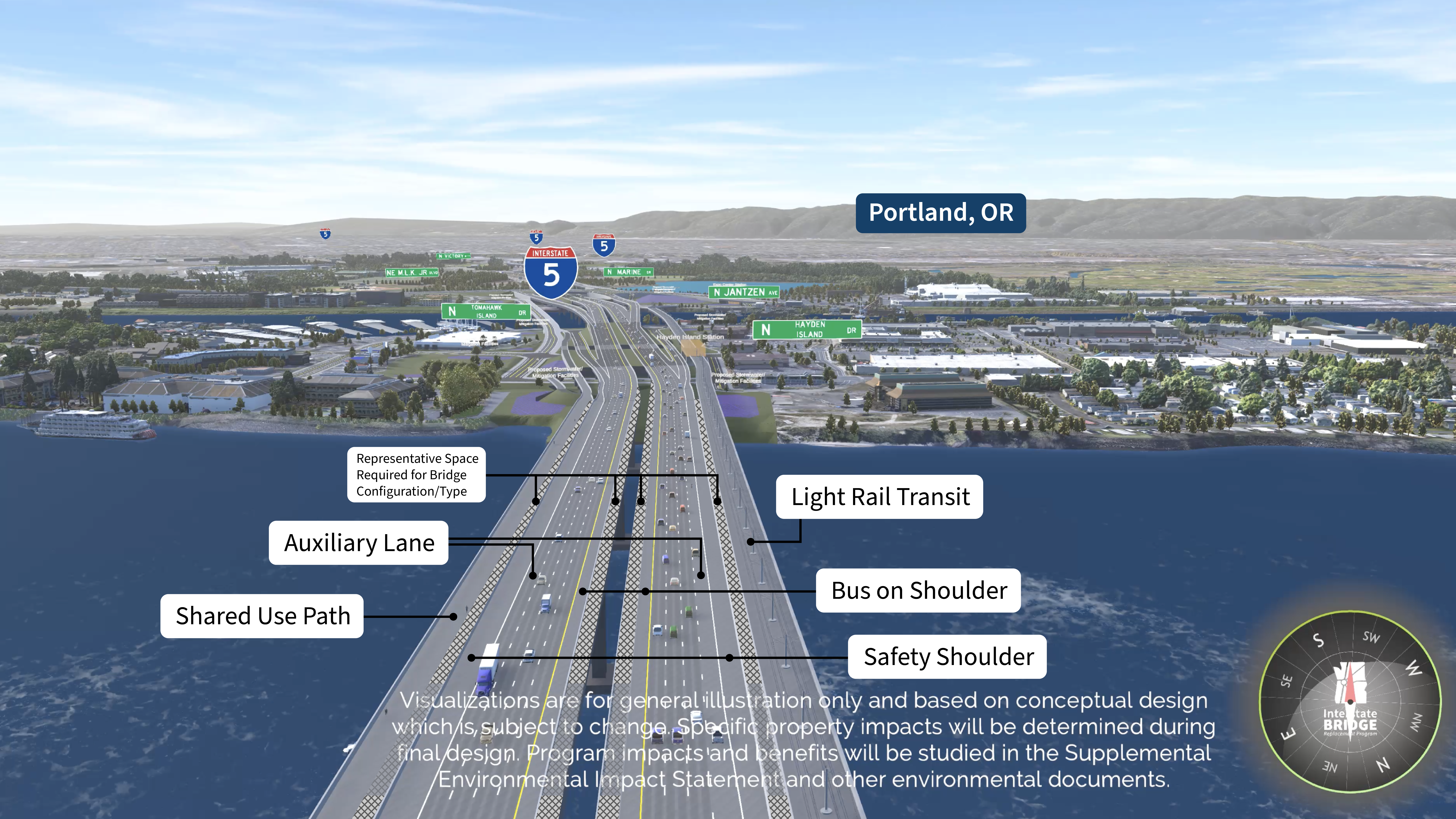
SB I-5 – Single-level bridges annotated to demonstrate auxiliary lane, bus on shoulder, shared use path and light rail transit.
NB I-5 – Single-level, Fixed-span Extradosed Bridges, 1 Auxiliary Lane and No C St Ramps
SB I-5 – Single-level, Fixed-span Steel Girder Bridges, 1 Auxiliary Lane and No C St Ramps
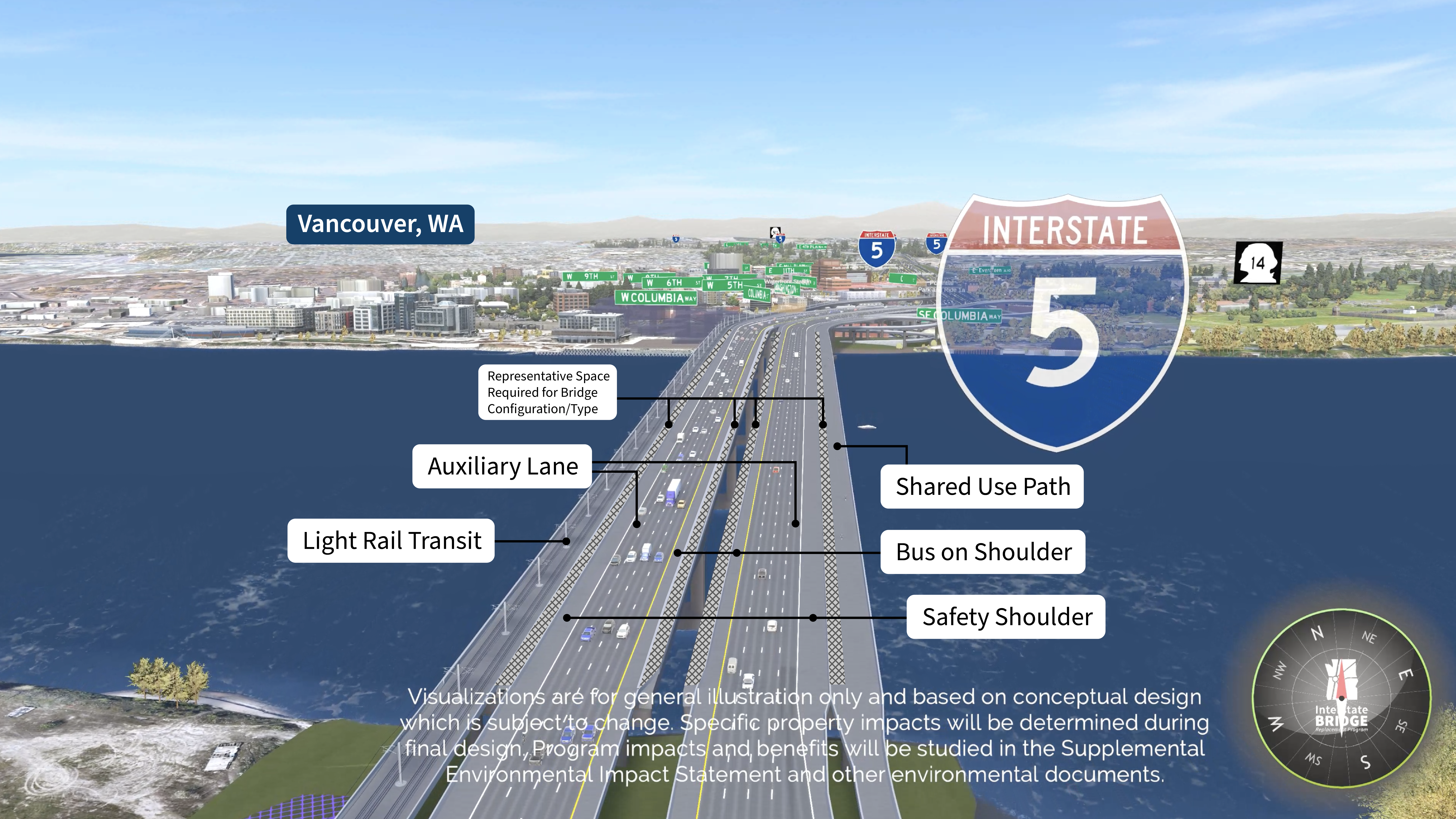
NB I-5 – Single-level bridges annotated to demonstrate auxiliary lane, bus on shoulder, shared use path and light rail transit.
NB I-5 – Double-deck, Fixed-span Truss Bridges, 2 Auxiliary Lanes and C St Ramps
SB I-5 – Double-deck, Fixed-span Truss Bridges, 2 Auxiliary Lanes and C St Ramps
The videos above show program investments and design options being studied.
New River Crossing Visualizations - Viewpoints
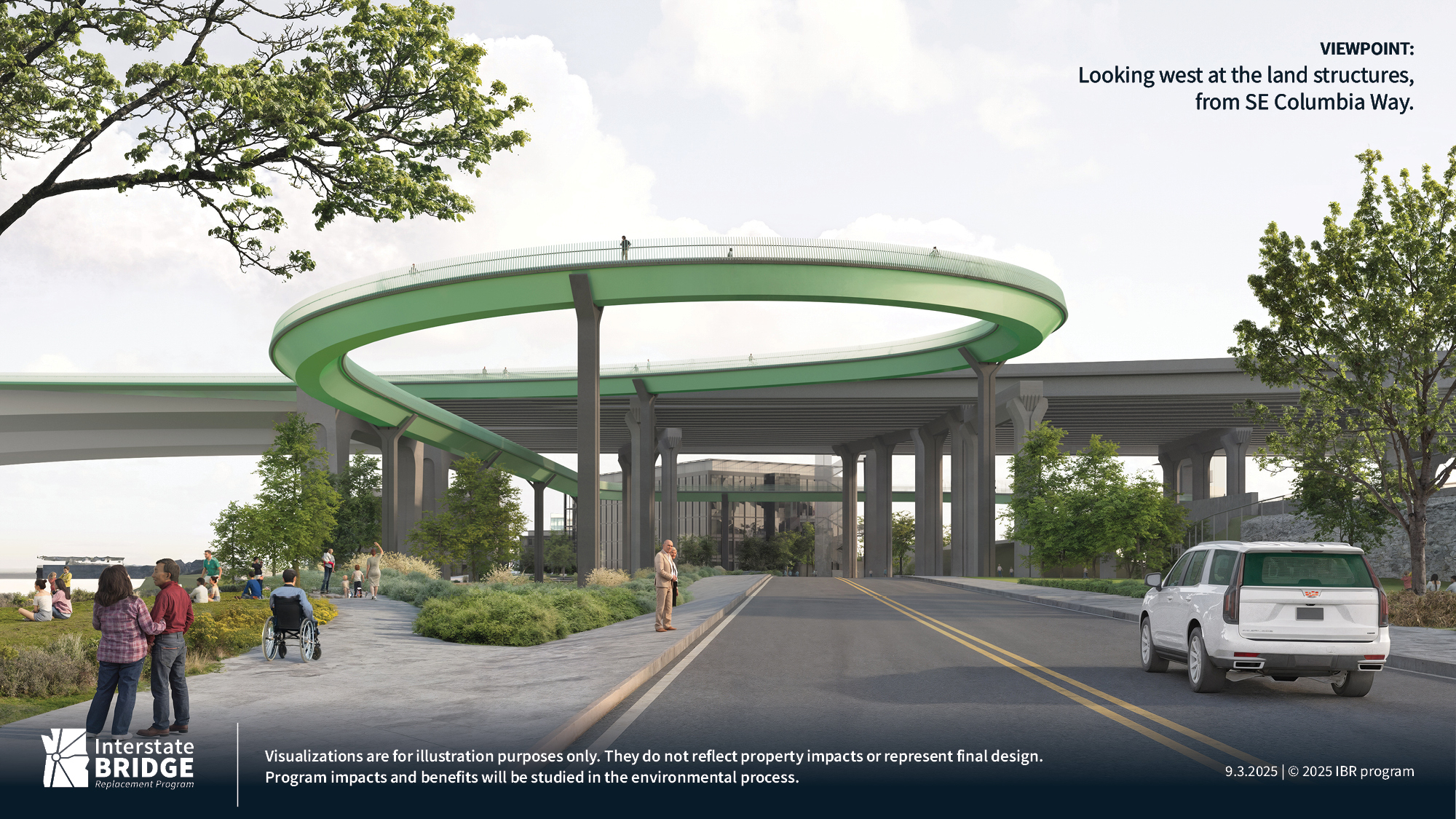
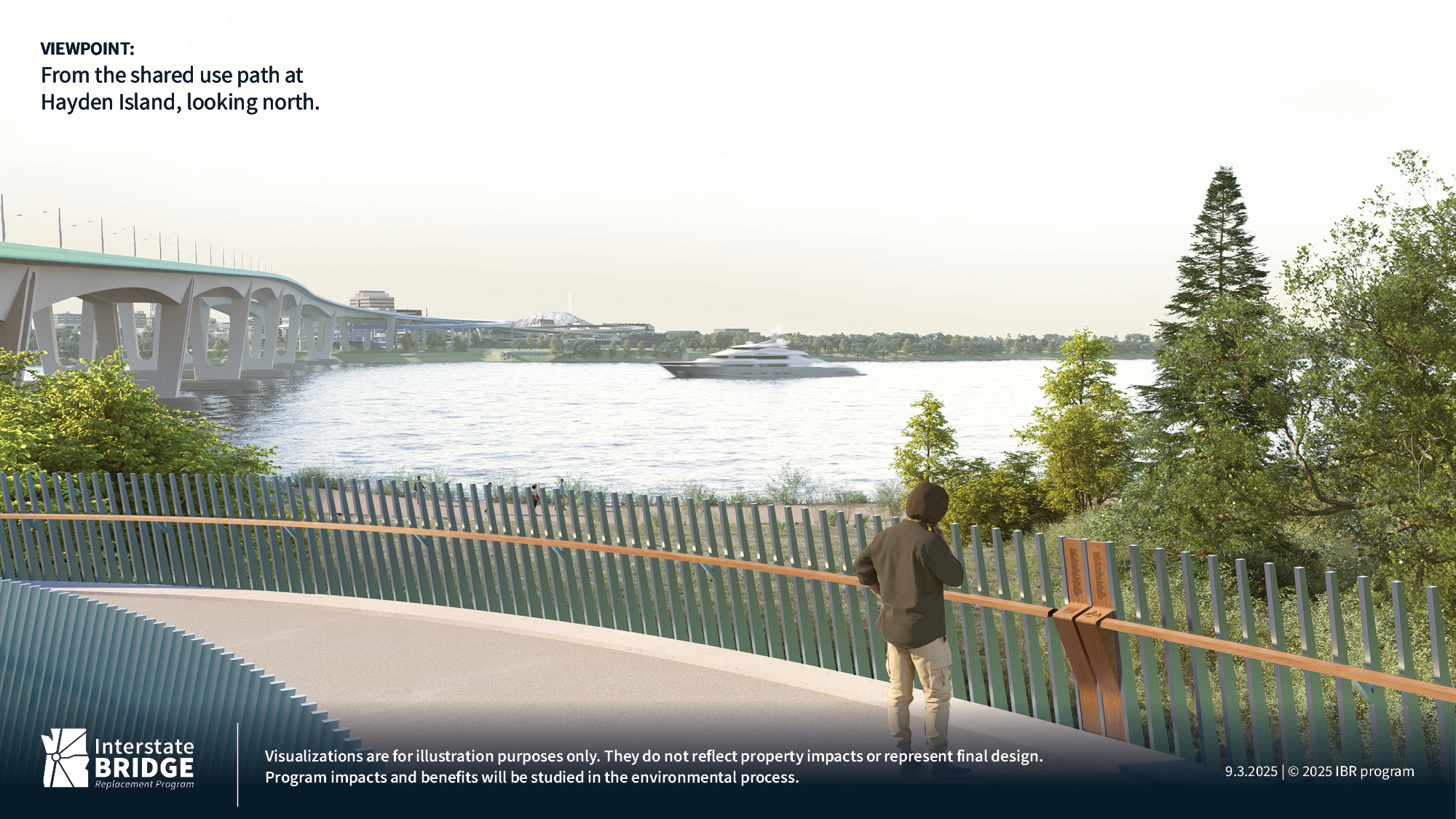
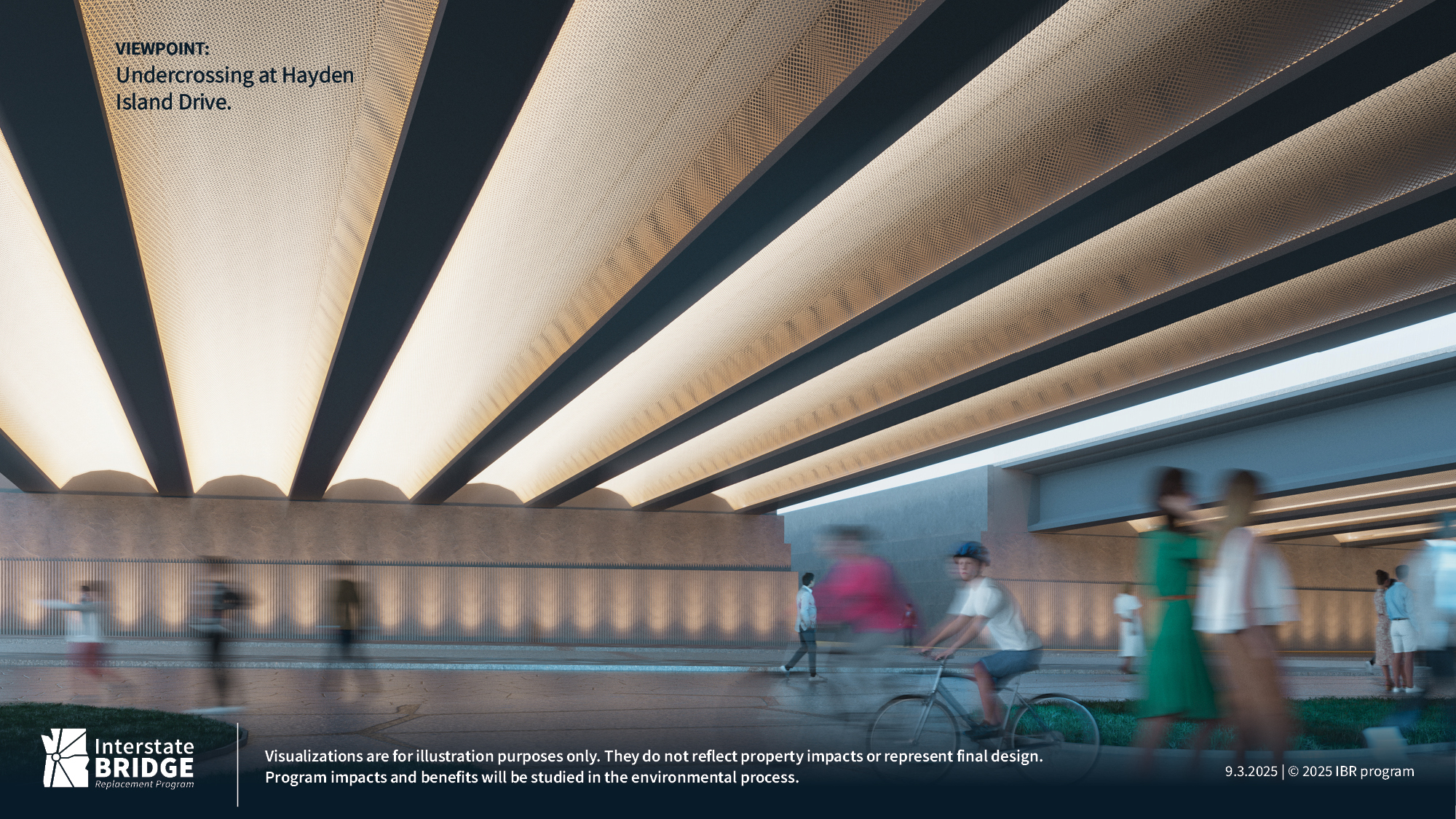
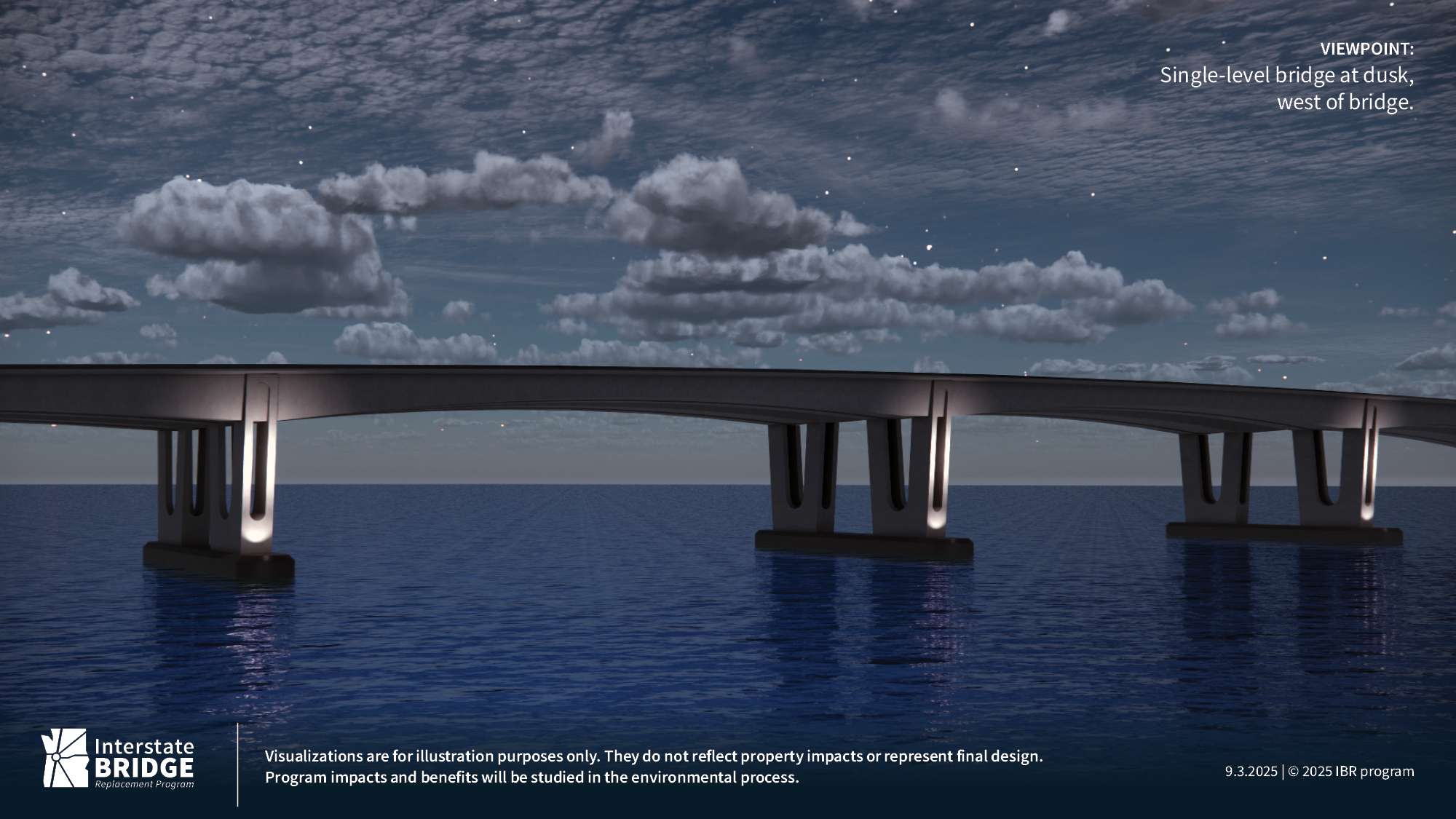
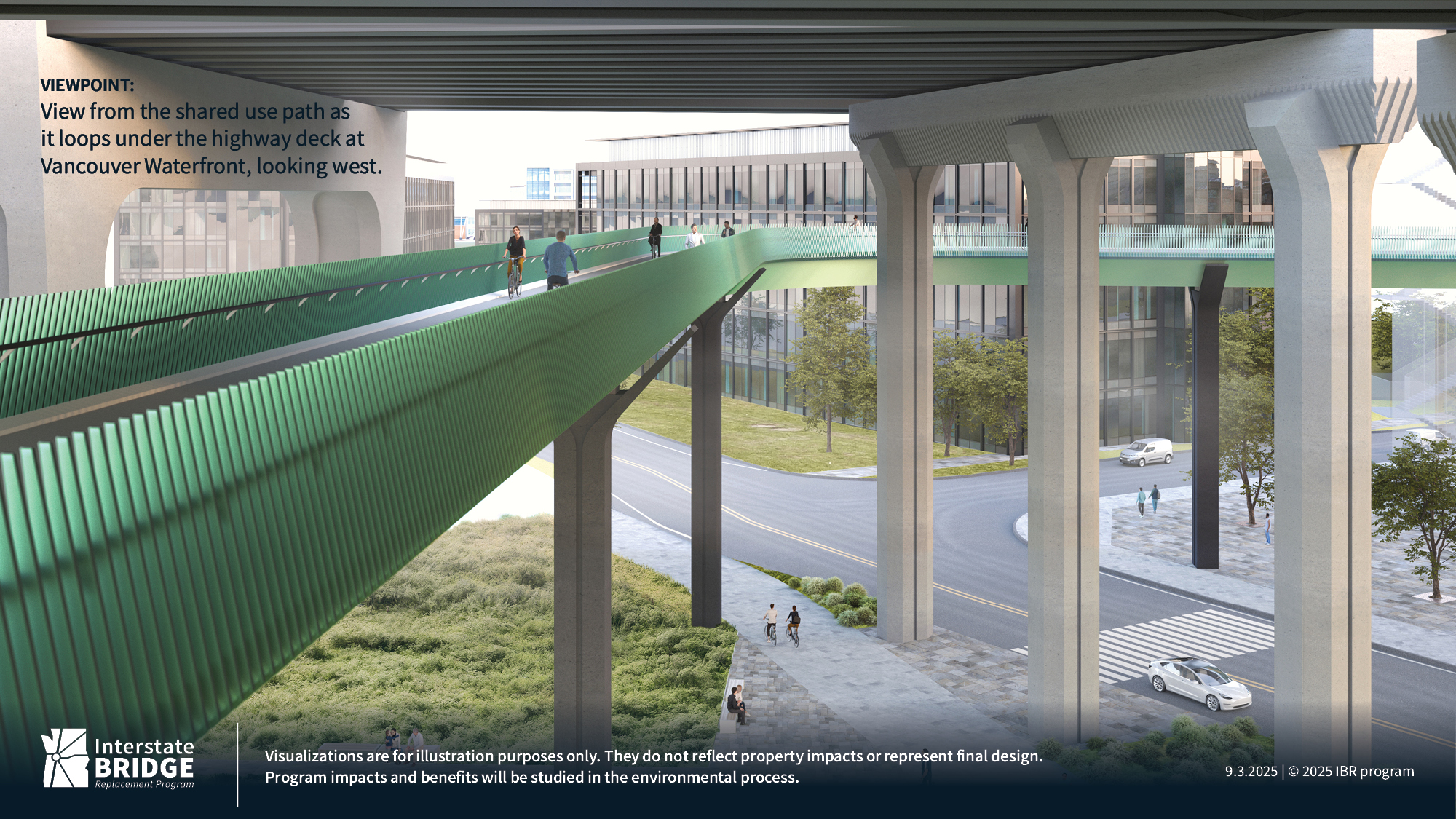
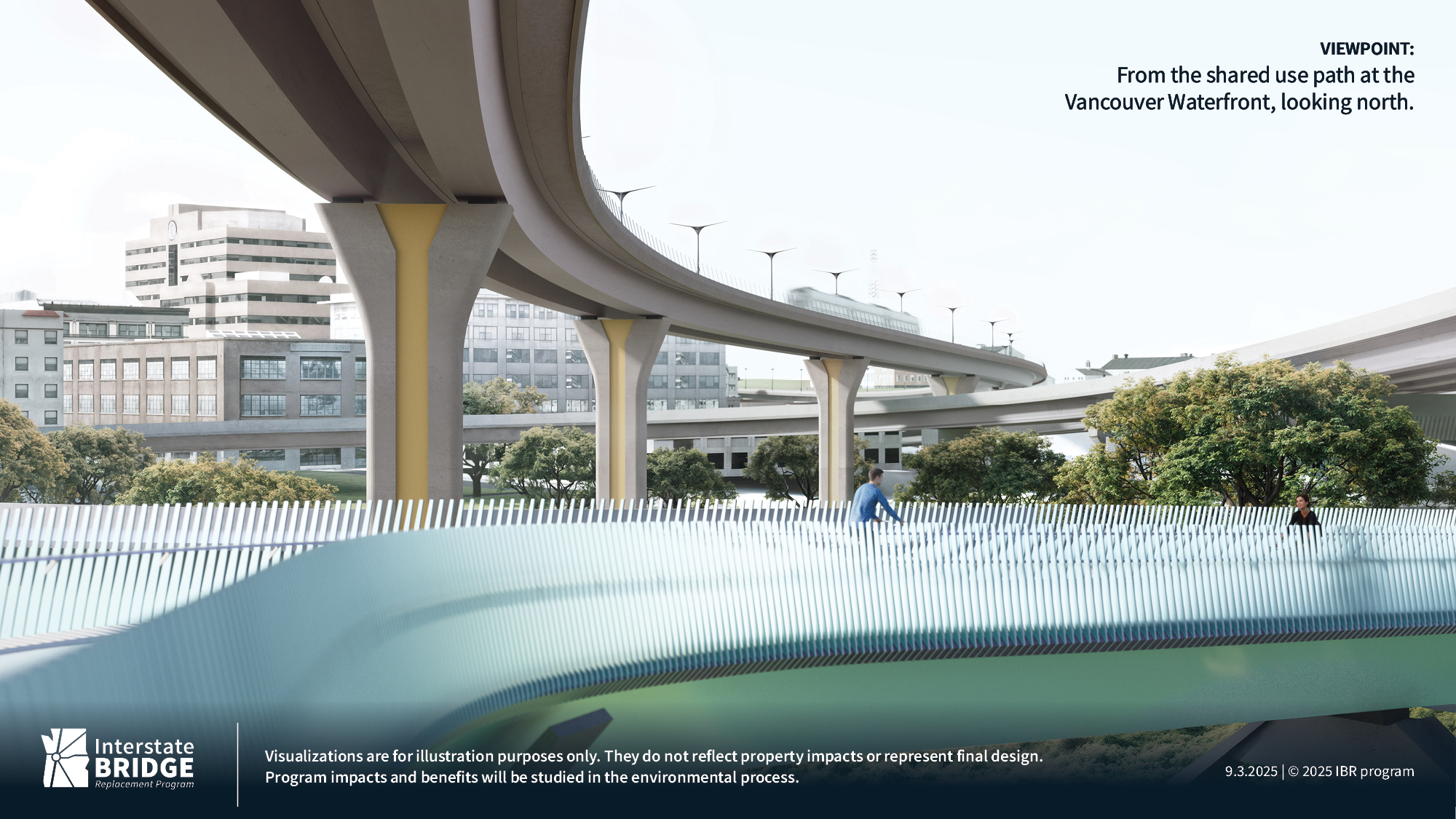
Images were developed to help the community visualize a replacement bridge and nearby elements. The images show each of the bridge configurations (single-level, double-deck, and movable-span) being analyzed in the Supplemental Environmental Impact Statement (SEIS) from different viewpoints close to the proposed structure or while traveling on the shared use paths* in these areas. The images include one example bridge type for each of the bridge configurations: extradosed bridge for single-level fixed-span, truss bridge for double-deck fixed-span, and girder bridge for a movable-span. They do not represent a complete range of bridge types being considered. No decision has been made on the bridge type or configuration at this time.
*Shared use paths: Active transportation facilities and pathways for non-motorized travel including walking, biking, and rolling.
River Crossing Visualizations - Bridge Types
The images below were created to help visualize what a proposed replacement bridge could look like. The visualizations show five different bridge types based upon the three configurations currently being analyzed in the environmental review process (single-level fixed-span, double-level fixed-span, and single-level movable-span bridge configurations).
We need your help.
Join us in our effort to replace the Interstate Bridge. Your feedback is important in shaping a solution.
Submit a comment Share your story Attend a meeting